


Issue 28
Sep 2026
In this Issue
Message from the University Librarian
Start Your Library Adventure with LiBUddy Now! 🚀
Dr. Stephen Riady Chinese Medicine Library Reopened on 11 May 2026
Weaving History into Landscape: HKBU TimeScape Officially Launches!
Partnering for Success: HKBU Library’s Impact in 2025–26
Scholarly Publishing Seminar 2026: Navigating Academic Publishing Success
Editor’s note

A new academic year brings a new study adventure, and your Library is ready to be both your map and a fellow adventurer. Our Newsletter journey begins with the University Librarian’s message, which outlines a future-focused vision that redefines the way to learn and create. Inspired by this spirit of discovery, this issue explores the many paths that begin right here at your library.
First, to welcome all new and returning students, we invite you to gear up for the semester ahead. Our mascot, LiBUddy, is ready to guide you on a fun Library Adventure to help you get reacquainted with our essential services and study tools.
We are also delighted to announce the reopening of our Chinese Medicine Library. Come in and see the refreshed and modern interior.
While we celebrate this new chapter, we also treasure our memories. This spirit of preserving our shared history is at the heart of the new HKBU TimeScape platform. Not only can you read stories from the community, but you can also contribute your own.
Grounded in last year’s data and user voices, the 2025–26 Library Impact Report shows how we partnered with our community to elevate student experience, accelerate research and expand knowledge sharing and where we’re headed next.
From connecting you with publishing experts at our recent Scholarly Publishing Seminar to introducing our new staff members, whose roles are focused on transdisciplinary support and innovation, we are dedicated to supporting your scholarly endeavours with professional, caring guidance every step of the way.
We hope this issue helps you navigate the adventurous year ahead. Happy studying and happy exploring.
Connie Cheng
Marketing Officer
Welcoming Students Then and Now: The University Librarian’s View

Welcome to the first Library Newsletter of the 2026-27 academic year! Whether you are joining HKBU for the first time or returning to familiar surroundings, your Library is always here for you. We are a gateway to world-class collections, a partner in your learning and research, and a great place to study. Everything we do this year continues to be guided by our five strategic priorities for the 2025-28 triennium, and in this message I would like to share a few highlights of what lies ahead.
Foremost among these is Phase 2 of the CollabTech Commons, located on Level 4 of the Main Library. The centrepiece will be an immersive studio, open to students and faculty of all disciplines, offering new ways to experiment, create, and collaborate. We will also be constructing a one-button studio in response to strong student demand for professional recording facilities. These developments embody two of our strategic priorities at once: keeping the Library digital first and future focused, and serving as genuine partners in transdisciplinary learning and research. Stay tuned for the launch next semester!
This year also brings the culmination of the University’s 70th anniversary celebrations, with major events including the Gala Dinner and Homecoming taking place in late November. The Library’s signature contribution is HKBU TimeScape, an interactive online map that lets you explore the development of our campuses across seven decades. TimeScape reflects our commitment to connecting heritage to community, and while it marks a celebratory milestone, it is built to last. We will sustain and enrich it for the anniversaries yet to come.
Looking further ahead, we are exploring how the Library’s trusted information resources can be integrated more tightly with AI tools, and we have begun conversations with library vendors on this front. The prospect is genuinely exciting, but we are equally mindful that these technologies will have a profound impact on how knowledge is sought and created. We are committed to proceeding thoughtfully, with careful attention to the ethical implications and to sustaining the human insight and creativity that must remain at the heart of scholarship.
Seven decades of history have shown that the Library evolves with HKBU, and the year ahead will be no exception. Through all this change, the mission of HKBU librarians remains a constant: to facilitate the creation of knowledge at the University. On behalf of all my colleagues, I wish you an inspiring year of discovery ahead, and I encourage you to make full use of the Library’s spaces, collections, and services to enrich your learning and research experience.
Christopher Chan
University Librarian
Start Your Library Adventure with LiBUddy Now! 🚀

Welcome back! LiBUddy (our beloved library mascot) is eager to begin the new academic year with you by leading you on a Library Adventure:
LiBUddy’s Library Adventure: Discover, Connect, Explore
⌛ From 19 August (Wed) to 12 October (Mon) 2026
🧭 Level 3, Au Shue Hung Memorial Library (Main Library)
Let’s go!! 🥳
Play our fun and interactive Orientation Exhibition activities!
- 🔍 Discover the Library’s transformation through AR
See how the Library’s spaces have transformed through the years.
- 🤝 Connect with essential resources
Explore AI Research Tools, install LibKey Nomad and EndNote, set up Google Scholar, and join a Library Tour to become a Library Pro.
- 🗺️ Explore the library further
Take on️ The Library Quest treasure hunt and attend Library Survival Skills Workshops.
New and returning students — Come and play!
LiBUddy stickers and charms are waiting for you at the Main Library (while stocks last)!
🎯 Get a sticker —
By sharing an academic goal at the Main Library

🧸 Get a LiBUddy charm —
By completing The Library Quest and attending at least one Library Survival Skills Workshop

Venus Lam
Information Services Librarian
Dr. Stephen Riady Chinese Medicine Library Reopened on 11 May 2026
To facilitate renovations in the Jockey Club School of Chinese Medicine Building, the Dr. Stephen Riady Chinese Medicine Library (CML) closed on 16 June 2025 and temporarily relocated its collections and staff office to the Main Library in late June 2025, maintaining services throughout. With renovations complete, the collections and staff office returned in late April 2026, and the renovated CML reopened on 11 May 2026, offering a more comfortable learning environment. We look forward to welcoming you to the refreshed CML!


David Su
Chinese Medicine Librarian
Weaving History into Landscape: HKBU TimeScape Officially Launches!

We are thrilled to announce the launch of HKBU TimeScape: Campus Development Map — a unique digital platform that intertwines seven decades of HKBU’s history with the evolving landscape of our campus. Developed through the close collaboration within the University Library and with invaluable support from the Department of History, HKBU TimeScape invites you to rediscover our university in a whole new way.

Within HKBU TimeScape, you can explore our Interactive Map: Journey through Time and watch the campus transform, from its beginnings as Hong Kong Baptist College in 1956 to the vibrant institution we know today. Thanks to Geographic Information System (GIS) technology, you can see each building, learn its history, and witness Kowloon Tong’s changes, simply by adjusting the time bar or switching historical map layers. The platform also hosts a Digital Repository featuring over 2,000 records, including photos, publications, videos, architectural plans, and glimpses of student life, offering everyone a chance to relive or discover the stories that shaped HKBU.
To enrich HKBU’s 70-year legacy, we invite you to add your voice to the story! Share your unique HKBU memory in the Community Story section of the platform and help us weave a vibrant tapestry of campus life. Not only will your experience inspire others, but you will also receive a meaningful souvenir as a token of our appreciation!
Meanwhile, enjoy these exclusive behind-the-scenes stories from the project teams that brought HKBU TimeScape to life!
From Lunchtime Chat to HKBU TimeScape
As the guardians of HKBU’s history, we initiated HKBU TimeScape to celebrate the university’s 70th anniversary. Our goal was to create a living archive to safeguard and share the University’s memory. We do this by ensuring the long‑term preservation of the records documenting HKBU’s history, and by providing access to these materials to support research and outreach across the university.
We can still vividly remember how the idea for this platform began over a casual chat after lunch. We were discussing cultural mapping, campus development, and spatial history. From that conversation, our vision took shape: an interactive map showcasing our campus development that utilises archives to record and share how our spaces have evolved over time.
By developing a digital humanities platform, we learnt a lot about the strengths and limitations of different systems. Through extensive discussions between Library units and the History team, we successfully created the prototype you see today. Thanks to our partners, our vision has become a reality.

Through this platform, we hope to connect BUers near and far. By integrating geospatial technology with campus development, we invite our community to explore how the University’s growth parallels the history of Hong Kong. To serve diverse audiences and interests, the platform allows users to search, filter by era and format, or browse curated timelines, offering something to spark curiosity for everyone.
A key feature of our platform is the collection of community stories, linked directly to existing archives, and campus. Each contribution enriches the record, turning personal memories into a shared history authored by our community.
As the curator coordinator of the project, I would like to express heartfelt gratitude to my team, Lu Shan-shan, Madeline Fong and Zef Ho, as well as our partners from the Department of History: Professor Kwong Chi-man, Ash Hui, and Samuel Kuo. Many colleagues from across the Library contributed their expertise to the TimeScape – special thanks to them as well: Yvonne So, Kimmy Poon, Annie Sit, Yip Wing-chung, and Enoch Wong; and Sam Ho and Arthur Lee. With the support of our University Librarian Christopher Chan and Deputy University Librarian Bethany Wilkes, this platform became possible. We invite every BUer to explore HKBU TimeScape and contribute your story.
Jeannette Ma
Special Collections and Archives Librarian, HKBU Library
Curator and Coordinator, HKBU TimeScape
The Backbone of the HKBU TimeScape Digital Repository
I was responsible for designing and building the Digital Repository for HKBU TimeScape. From the start, our goal was to turn the AI preview of the ideal layout and features into a real product. In the early phase, we spent a lot of time discussing and agreeing on data formats and classification. AI mock-ups combined with the agreed organising scheme, became a clear wish list and a blueprint for data import. That upfront work made the later development flow more smoothly and made it easier to add upgrades in the future.
Building on our in-house technology, we developed an intuitive interface that combines interactivity and unified information. Apache Solr powers fast full-text search and faceted filters, while Leaflet manages the map, locations, and pins. The fusion of these elements brings a unique experience.
The biggest challenge was delivering a fully responsive repository/database, so the site feels consistent on desktop, tablet, and phone. We designed mobile first, kept components and styles unified, and ran several test-and-refine rounds. Early alignment on data and classification was the key to a smooth launch and future enhancements.


Arthur Lee
Library Systems, HKBU Library
Digital Repository Development Team, HKBU TimeScape
A Cartographic Journey Through Time
Developing HKBU TimeScape was a richly rewarding and collaborative endeavour for our team. Our primary objective was to transform archival records into an interactive, three-dimensional narrative that allows the university community to visualise the physical evolution of our campus over the past seven decades.
The process was a true exercise in trans-disciplinary teamwork, bringing together colleagues with complementary expertise from the Library and Department of History. The Library provided the foundational archival materials and historical resources, while History team was instrumental in building the geographic data and map layers that form the backbone of the platform. Our role centred on the user-facing side of the project, where we focused on crafting an engaging and intuitive experience that would bring the historical data to life. Close coordination among all parties was essential throughout the development cycle.

A key challenge was managing diverse inputs and ensuring seamless integration across different stages of the workflow. However, it was this very process that made the project so fulfilling. The discussions around data structure, map capabilities, and user interaction were dynamic and insightful, highlighting the depth of knowledge within our collaborative group.
Seeing the beautiful, historically-accurate 3D models come to life, supplemented by background stories and archival photos, has been a profound learning experience for us all. We are incredibly proud of the result and grateful for the opportunity to contribute to a project that celebrates our university’s rich history. Here’s to another 70 years of growth and community!
Yvonne So
Digital Initiatives and Research Cluster, HKBU Library
Interactive Map Digital Platform and Website Development Team, HKBU TimeScape
Mapping History: The GIS Perspective
Our team (Professor Kwong Chi-man, Ash Hui Chun-sang and Samuel Kuo Ching) led the GIS development of HKBU TimeScape, the project’s interactive spatial platform. Our goal was to enable layered historical visualisation—allowing users to overlay maps, images, and data across different time periods to witness the transformation of the campus landscape.
Working with historical maps, aerial photographs, and detailed street plans, we georeferenced and aligned archival materials using ArcGIS. This process required collecting various types of historical spatial data and cross-checking to ensure spatial accuracy across decades of urban change. We included 3D block models that serve as data points, representing campus buildings and phases of development. An innovation tried in this project is the use of AI to colourise historical aerial photos, with reasonably good results. Users can not only perceive the growth of the campus over time but also have access to qualitative materials—photographs, narratives, and archival records—directly through the spatial interface.
Collaboration was central to the project’s success. Close coordination between historians and colleagues from the University Library ensured that spatial data remained historically grounded. Among the challenges we faced were inconsistencies in early cartographic records and variations in scale and projection. Resolving these required both technical acumen and historical interpretation.

Professor Kwong Chi-man
Department of History
Geographic Information System (Interactive Map) Team, HKBU TimeScape
Partnering for Success: HKBU Library’s Impact in 2025–26
The Library Impact Report 2025–26 shows how the Library responds to student and faculty needs while supporting the University’s goals, drawing on service data, user feedback and examples of practice. It highlights how the Library’s work contributed to four University strategic priorities: Best Student Experience, Research Excellence, Capacity and Knowledge Transfer.
🎓 Empowering Learners – Best Student Experience
Library orientation and instruction attracted 9,309 participants across 191 sessions, with 93.65% satisfaction. AI literacy was incorporated into 85% of library instruction, addressing critical skills for a changing information environment.
Satisfaction with Library services reached 96.93% among postgraduates and 95.57% among undergraduates.
📖 Advancing Research – Research Excellence
The Library supports researchers through consultations, access to scholarly resources, publishing assistance, research data support and services that enhance the visibility of their work. Satisfaction among academic, research and teaching staff stood at 93.88%.
Through 15 open-access publishing agreements, the Library helped make 401 articles openly available, with estimated cost avoidance of approximately HK$2.3 million for the University.
🏛️ Building Collaborative Capacity and Knowledge Sharing – Capacity and Knowledge Transfer
Satisfaction with Main Library spaces reached 98.07%, with user feedback also highlighting support for interdisciplinary collaboration.
Downloads through HKBU Scholars and E-Journals@HKBU reached 454,318. Together, HKBU Scholars and digital scholarship projects recorded nearly three million pageviews. These platforms provide routes for audiences to discover and access HKBU scholarship.
Looking Ahead
The findings highlight some of the many ways in which the Library contributes to the University’s priorities while providing a basis for ongoing improvement and forward-thinking approaches.
Read the Library Impact Report 2025–26 to learn more about these contributions and the support available for learning, teaching and research.
Wallace WONG
User Experience & Assessment Librarian
Scholarly Publishing Seminar 2026: Navigating Academic Publishing Success

Our Scholarly Publishing Seminar returned after years! On 28 May 2026, in partnership with the Graduate School, the Library hosted the highly anticipated Scholarly Publishing Seminar: Navigating Academic Publishing Success. This 2-hour seminar engaged an audience of 120 research postgraduates, faculty members, and undergraduates, who attended either in-person at the Cha Chi-Ming Science Tower or online via Zoom.
That Thursday afternoon was filled with invaluable insights from a panel of distinguished experts, each offering a unique perspective on our publication journey. First, Dr. Mimmi Mononen, Senior Editor at Nature Communications, kicked off “Decoding the Editor’s Desk” providing a rare look behind the curtain of a top-tier journal and revealing the key criteria editors use to evaluate manuscripts. Attendees learned practical tips on how to navigate the submission process effectively.
Second, Professor Alex Siu Wing Chan, from the Academy of Wellness and Human Development, offered a “Dual Perspective on Publishing Strategy.” Drawing from his extensive experience as both a published author and an editor for prestigious journals published by Elsevier, Sage and Springer Nature, Professor Chan shared powerful strategies for thinking like an editor while crafting a manuscript. He offered guidance on building a robust and impactful publication record.
Finally, Ms. Claire Hao, Founder of Every Author Publishing, presented “Polish & Publish: Essential Author Services for Global Impact.” Ms. Hao addressed the critical importance of clarity and professionalism in academic writing. She introduced some essential skills for helping first-time and non-native English-speaking authors elevate their manuscript preparation.
Special thanks to all of our esteemed speakers for sharing their expertise so that attendees may start to demystify the complex world of academic publishing with a clear and actionable roadmap. No worries if you missed this empowering event. Stay tuned and hope to see you in our next author seminar!

Nancy CHAN
Head of User and Information Services
Meet our new librarians!
Lukas Tschopp
Learning & Transdisciplinary Support Librarian
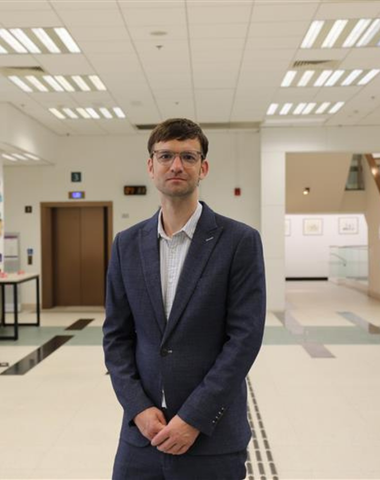
I am the new Learning & Transdisciplinary Support Librarian, and I joined the HKBU Library in December 2025. I have never had a job title with so many characters. However, I believe it reflects the broad range of topics related to this role. As HKBU emphasizes transdisciplinarity in education, it reflects the library’s nature. A place where people and ideas meet and evolve.
I see my role as facilitator of the library’s services to faculties and students. I would particularly like to work closely with the faculties integrating our services with the Division of Transdisciplinary Undergraduate Programmes.
What I truly appreciate about HKBU Library is the welcoming atmosphere that my colleagues created. A small wave, a short chat, or a little smile, these are all gestures to make me feel comfortable. Feeling comfortable is helpful and to me like the starting point for working together.
Whenever you feel like dropping by my desk to have a chat, to get feedback, or to work on some serious stuff, I am happy to see you.
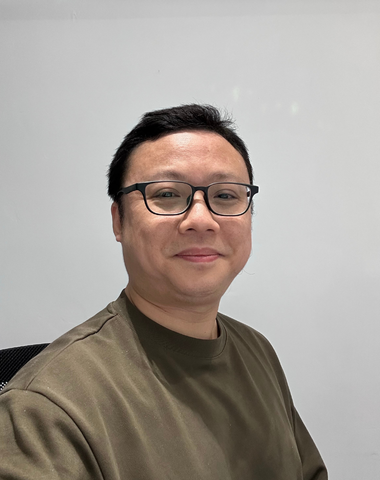
Tom Siu
Innovation Services Manager
Hi, I’m Tom, and I’m delighted to be part of HKBU Library. My role focuses on the development and operation of the CollabTech Commons, where I work with colleagues across the University to explore how emerging technologies can support learning, teaching, creativity, and collaboration.
Before joining the Library, I worked in research and development, technical projects, artificial intelligence, and engineering project management. I have always enjoyed exploring new ideas and, more importantly, finding ways to turn them into practical and useful solutions.
At the Library, I am particularly interested in developing technology-enabled spaces and services, including immersive learning environments, prototyping facilities, and other tools that can open up new possibilities for our students and staff. I believe technology is at its best when it is intuitive, accessible, and easy to use.
Please feel free to say hello if you see me around the Library. I look forward to working with colleagues and students across HKBU and discovering new possibilities together.
Last updated: 23 September 2026